How to Prepare for a Parasailing Flight Safely
The moment the boat accelerates from the marina and the parachute fills behind you, the Costa del Sol looks completely different. Beaches, coves, marinas, and the mountain backdrop stretch out below in a view that is equal parts peaceful and thrilling. Knowing how to prepare for a parasailing flight means you can focus on that moment instead of worrying about what you forgot at the hotel.
Parasailing is one of the easiest ways to add real coastal thrills to a holiday in Marbella, Benalmádena, Fuengirola, Torremolinos, or Mijas. You do not need previous flying experience or the athletic confidence required for some high-energy water sports. But a little planning matters, especially when your group is coordinating beach time, transfers, children, cameras, and a limited number of holiday days.
Start with the right Costa del Sol departure point
A parasailing experience may be advertised for the Costa del Sol, but the actual departure marina is what determines whether it fits easily into your day. This is the detail that can turn a simple coastal activity into an unnecessary rush across the coast.
Travelers staying in Benalmádena often have convenient access to departures around Puerto Marina. Fuengirola visitors may find options closer to their resort, while Marbella and Mijas travelers should check the precise marina and allow realistic travel time. Torremolinos is well placed for activities in the Benalmádena area, but summer traffic and parking can still affect your schedule.
Confirm the meeting point, arrival time, and whether transport is included before making plans around lunch, a beach club, or another excursion. Parasailing itself is usually a short, exciting part of a longer boat operation, so arriving early is far better than watching the boat leave while you are looking for the marina entrance.
Check the weather, but trust the operator’s call
Blue skies do not automatically mean flying conditions are perfect. Wind direction, gusts, sea state, and visibility all affect whether a parasailing boat can operate safely. A light breeze can be ideal, while choppy water or stronger offshore winds may lead to a delay, rescheduling, or cancellation.
Check the forecast the day before, but do not make your own final safety judgment from a weather app. Local captains see the marina conditions and open water conditions firsthand. Their decision may differ from what the forecast suggests, particularly around the coast where wind can change quickly.
This is why parasailing works best when scheduled early in your trip rather than on your final afternoon. If weather requires a change, you have more flexibility to move the experience to another day. Morning departures can also bring calmer seas and cooler temperatures in peak summer, although availability varies by marina and operator.
What to wear for a parasailing flight
Dress as though you may get splashed, even if the experience is designed for a dry takeoff and landing from the boat. Conditions vary, and a bit of sea spray is part of the fun.
Wear secure swimwear or light, quick-drying clothes that feel comfortable under a harness. A rash guard or T-shirt can be useful for guests who want more sun coverage, especially during midday. Bring a towel and a dry change of clothes for afterward, particularly if you plan to head straight to a restaurant, sightseeing tour, or your hotel.
Avoid loose hats, flip-flops, dangling jewelry, and anything you would hate to lose over the water. Sunglasses can be useful on the boat, but only wear them in the air if they fit securely with a strap. Most operators provide the essential safety equipment, including the harness and life jacket, but check what is included when you book.
Sunscreen is not optional. The sun reflects off the water, and you can burn faster than expected while waiting on the boat. Apply it before reaching the marina, then bring it along for the rest of your day.
Eat light and be honest about motion sickness
You do not need to avoid breakfast before parasailing. In fact, flying on an empty stomach after a late night can leave you feeling worse. Choose a light meal, drink water, and avoid arriving dehydrated from hours in the sun.
If boats make you queasy, plan ahead. Sea sickness can affect anyone, including confident travelers who have never had a problem on a large ferry. Consider an over-the-counter motion sickness option if it is appropriate for you, and follow the instructions from a pharmacist or medical professional. Sit where the crew recommends, look toward the horizon, and let them know before departure if you are concerned.
Avoid excessive alcohol before your flight. A celebratory drink is better saved for afterward, when you can enjoy the photos without feeling unsteady on the water.
Listen closely to the safety briefing
Parasailing feels effortless for guests because the crew handles the technical work. That does not mean the briefing is a formality. Pay attention when the team explains how to sit, when to stand, where to hold on, and what to do during takeoff and landing.
You may fly alone, as a pair, or in a small group, depending on the operator, wind conditions, and combined weight limits. This is not something to negotiate at the dock based only on who wants to fly together. The crew will make the appropriate pairing decisions for balance and safety.
Tell the operator about relevant medical concerns, recent injuries, pregnancy, or mobility limitations before you board. Parasailing is often accessible for many first-timers, families, and couples, but suitability depends on the individual, the equipment, and the day’s conditions. Age, height, and weight requirements also vary, so check them in advance rather than assuming a child or teen can participate.
How to prepare for a parasailing flight with kids
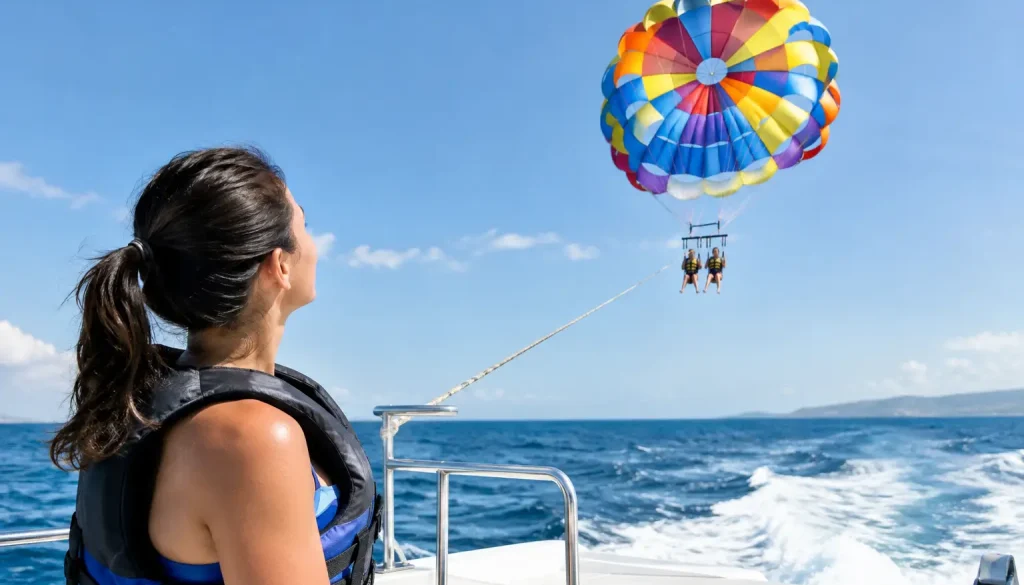
For families, the biggest preparation is setting expectations. Explain that the ride is usually calm once the parachute is in the air. It is not like a roller coaster or a high-speed jet ski. The sensation is more like rising gently above the sea, with plenty of time to take in the coastline.
Children should know that they must follow crew instructions immediately and wear their life jacket correctly. Choose a departure time that does not clash with nap time, a long transfer, or the hottest part of the afternoon. A tired, hungry child is less likely to enjoy even the most photogenic holiday experience.
Bring water, snacks for after the activity, and a layer if your child gets chilly in the sea breeze. Most importantly, check the operator’s minimum age and weight rules before promising the experience. If one family member cannot fly, some operators may allow non-flying guests to join the boat, but capacity and pricing policies differ.
Bring a camera only if you can secure it
The photos can be spectacular: turquoise water under your feet, the coastline in the distance, and your friends waving from the boat below. But an unsecured phone is a very expensive souvenir to lose.
A waterproof phone pouch with a reliable neck strap is the practical choice if the operator permits guests to take devices up. Test the seal before the trip and keep your grip simple. Do not spend the entire flight staring at a screen. Take a few photos, then enjoy the view with your own eyes.
Some crews offer photo or video packages. If you are traveling as a group for a birthday, bachelor or bachelorette weekend, or family celebration, this can be easier than passing phones around on deck. Ask in advance so you know whether to budget for it.
Plan the rest of the day around the sea
Parasailing gives you an adrenaline boost without taking over your entire day. Pair it with a relaxed marina lunch, a beach afternoon, or a sightseeing stroll nearby. If you are staying farther away, avoid scheduling a tightly timed excursion immediately afterward. Marina parking, traffic toward Marbella, and the simple pleasure of wanting one more drink by the water can all stretch the schedule.
For guests based in Mijas or inland areas, consider whether the departure marina is practical before booking. Adventure Spain is built around this kind of local planning: the best activity is not simply the one that looks exciting online, but the one that fits your holiday base, group, and available time.
Arrive prepared, listen to the crew, and leave enough room in your day to enjoy the buzz afterward. When the boat pulls back into the marina, you will have more than a quick thrill – you will have one of those Costa del Sol memories that makes the beach look even better from ground level.