Is Canyoning Seasonal in Spain? Best Times
A Costa del Sol beach day can be blazing hot while the water inside a mountain canyon is cold enough to make your first jump feel very real. So, is canyoning seasonal in Spain? Yes – but not in the simple “summer only” way many visitors expect. In southern Spain, canyoning availability depends on the specific canyon, recent rainfall, water levels, guide assessments, and local access rules as much as the month on the calendar.
For travelers staying in Marbella, Mijas, Fuengirola, Benalmádena, or Torremolinos, the practical answer is that the main canyoning season usually runs from spring through fall. Summer offers the easiest holiday logistics, while spring and early fall can deliver the most exciting water conditions. Choosing the right date is less about chasing a fixed season and more about matching your group’s confidence, fitness, and travel plans to the canyon.
Is canyoning seasonal in Spain? The short answer
Canyoning is available in many parts of Spain for much of the year, but individual routes are seasonal. Some canyons are best when snowmelt and spring rain keep the pools flowing. Others are popular in summer because the warm weather makes swimming, scrambling, and jumping far more comfortable. A few routes may operate in winter with the right conditions and equipment, but this is generally for experienced participants rather than a casual vacation activity.
Around Málaga Province and the wider Costa del Sol, guided canyoning is most commonly offered from roughly April to October. That window is a helpful starting point, not a promise. A dry spell can reduce water flow, while heavy rain can make a canyon unsafe or lead an operator to postpone a trip. Good local guides make the call based on real conditions, not on whether a booking calendar says it is technically open.
This flexibility is a strength, not a drawback. It protects your group and helps ensure that your day includes the fun parts – natural slides, clear pools, short swims, abseils, and optional jumps – without forcing an unsuitable route.
What each season feels like in southern Spain
Spring: flowing water and cooler temperatures
April, May, and early June are often excellent for canyoning near the Costa del Sol. The countryside is greener, mountain temperatures are comfortable for hiking, and winter rainfall may leave canyons with stronger flow. For active couples, friend groups, and travelers who would rather not spend a full afternoon in peak summer heat, spring is a smart choice.
The trade-off is water temperature. Even on a sunny May day, shaded pools can feel chilly. Wetsuits are normally part of a guided experience for exactly this reason, but participants should still be prepared for cold-water moments. Spring conditions can also be more variable, so flexibility matters if rain is forecast.
Summer: the easiest time for vacation schedules
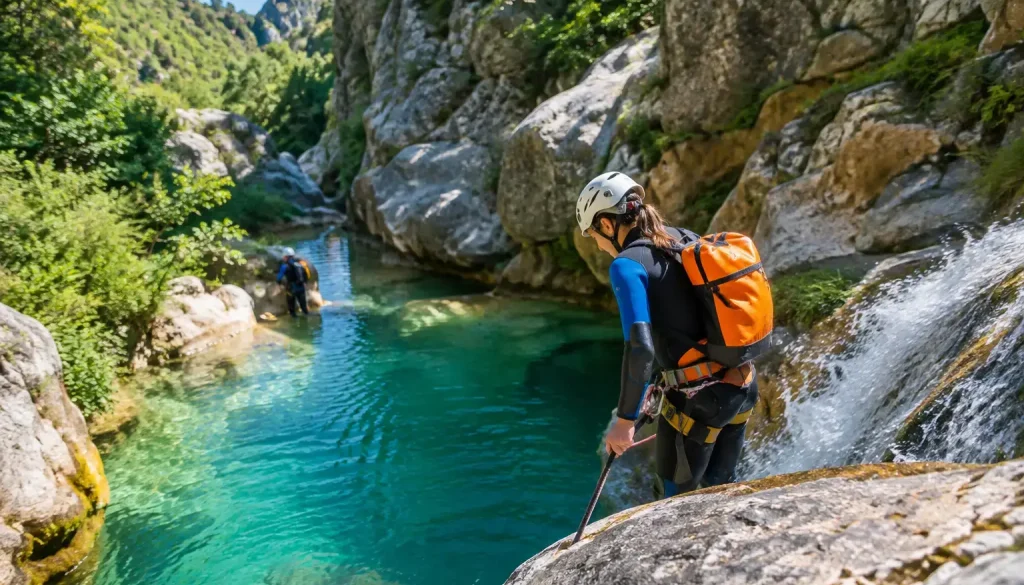
July and August are the classic Costa del Sol holiday months, and canyoning makes a brilliant break from the beach, pool, or marina. The contrast is part of the appeal: you leave the busy coast behind, pull on a helmet and wetsuit, and spend a few hours moving through a hidden landscape of rock walls and freshwater pools.
Summer is often the most accessible season for first-timers and families with older children because warm air temperatures make getting in and out of the water more comfortable. It is also the busiest period. Popular departure times can fill up, especially for private groups, bachelor and bachelorette parties, and families trying to coordinate around beach plans.
Book early if canyoning is a must-do experience, but do not assume every route is at its best in late summer. Some canyons have lower water levels after long dry periods. Guides may use a different route, adjust the itinerary, or recommend an alternative adventure if conditions are not right.
Fall: a strong choice for active travelers
September and October can be a sweet spot. Sea temperatures remain inviting, daytime heat eases, and the mountains feel less crowded than in high summer. Early fall often works particularly well for adults, couples, and groups who want an adrenaline-pumping day without the busiest vacation-season atmosphere.
Rain is the variable to watch. The first significant storms after a dry summer can change conditions quickly. Light rain does not automatically cancel a trip, but heavy rainfall can raise water levels, make access roads difficult, and create hazards inside narrow sections of a canyon. A reputable operator will never treat weather checks as an afterthought.
Winter: possible, but not the default holiday plan
Winter canyoning exists in Spain, especially on select technical routes, but it is not the usual choice for visitors based on the Costa del Sol. Shorter days, cold water, unpredictable rainfall, and fewer scheduled departures make it less convenient. If your trip falls between November and March, consider canyoning a conditions-dependent bonus rather than the centerpiece of your itinerary.
For most winter visitors, a powerful quad-bike ride in Mijas, a scenic Ronda day trip, or a coastal sailing experience may be easier to plan. If you are committed to canyoning, ask about current conditions, minimum group sizes, required experience, and whether transport is available from your resort area.
Your resort town affects the practical choice
Canyoning does not usually start on the beachfront. Many of the most memorable routes are inland, in mountain areas or river valleys, which means departure points and transfer times matter.
Marbella guests may have practical access to routes toward the western Costa del Sol or inland mountain areas, while travelers in Mijas, Fuengirola, Benalmádena, and Torremolinos may be better positioned for experiences east or north of Málaga depending on the canyon. The driving time can be anything from a manageable half-day outing to a long excursion, particularly when hotel pickups are involved.
Before booking, check where the activity actually begins rather than relying on a broad “Costa del Sol” label. Ask whether pickup is included, whether you need your own car, how long the transfer takes, and what time you will return. This is especially useful for families with dinner reservations, groups coordinating multiple activities, or visitors without a rental car.
Adventure Spain focuses on that local detail because an incredible canyon is only a great vacation choice when it fits comfortably into your day.
Water level matters more than a sunny forecast
A blue-sky forecast tells only part of the story. Canyoning guides look at rainfall in the canyon’s catchment area, not simply the weather at your hotel. It may be dry in Marbella while rain higher in the mountains has made a route unsuitable. Equally, a canyon can retain cold water long after a warm coastal week.
Water level changes the experience. Lower flow can make a route calmer and more approachable for beginners, although it may mean fewer active slides or less dramatic pools. Higher flow can be exciting, but it demands stronger swimming ability, greater confidence, and more technical judgment. On some days, higher flow simply means no trip at all.
That is why you should choose a guided canyoning experience rather than treating it like a self-guided swim. Guides provide helmets, wetsuits, harnesses and ropes where needed, explain how to move safely through each section, and know when conditions have crossed the line from adventurous to unsafe.
Who can go canyoning during the main season?
Many introductory canyoning trips are designed for active beginners, not expert climbers. You usually need to be comfortable in water, able to walk over uneven ground, and willing to follow instructions closely. Exact age, weight, swimming, and medical requirements vary by route and operator, so check them before making the day part of a family itinerary.
Optional jumps are common on beginner-friendly routes, but “optional” should mean exactly that. No one should feel pressured to leap from a ledge for a photo. Guides can often provide an alternative route down, although this depends on the canyon. If someone in your party is nervous around heights, has a recent injury, or does not swim confidently, raise it before booking rather than hoping it will work out on the day.
For private groups, canyoning can be one of the best shared Costa del Sol memories because everyone is involved. The fastest person does not simply race ahead, and the least confident person gets support through each obstacle. It is active, social, and far more memorable than another afternoon by the hotel pool.
How to choose your best canyoning date
If you are visiting between May and September, put canyoning on your shortlist and reserve a day with some flexibility around it. Morning starts are often more comfortable in the heat, while a midweek departure can feel less rushed than a peak weekend. Do not schedule it immediately after a late night if your group includes a big celebration – wet rock, swimming, and low energy are not a winning combination.
For April, October, or a winter visit, contact the provider closer to your travel dates and treat local advice as the final word. Pack swimwear, secure water shoes if requested, a towel, dry clothes for the return trip, and sunscreen for exposed approach walks. Leave valuables behind unless you have been told there is a safe way to carry them.
The best canyoning day in Spain is not necessarily the hottest day of your vacation. It is the day when the route is running safely, the transfer suits your resort base, and your group is ready to trade the shoreline for a few hours of freshwater thrills.