How to Prepare for a Canyoning Trip in Spain
The first jump into a clear mountain pool is the moment many Costa del Sol visitors remember most. Canyoning swaps the beach lounger for river slides, natural pools, short rappels, and rocky gorges – all under the guidance of a local professional. If you are wondering how to prepare for a canyoning trip, the key is simple: arrive ready to move, listen closely, and plan the practical details before adventure day.
For travelers staying in Marbella, Mijas, Fuengirola, Benalmádena, or Torremolinos, canyoning is usually an inland experience rather than one that starts at the marina. That makes departure location, transport, and the day’s weather just as relevant as your sense of adventure.
How to Prepare for a Canyoning Trip on the Costa del Sol
A guided canyoning experience is designed to make a wild-looking environment accessible to first-timers, but it is not a casual stroll. You may walk over uneven rocks, wade through cool water, swim short sections, slide through channels, and descend a waterfall on a rope. The exact route determines the balance of each activity.
Before booking, check the operator’s stated minimum age, swimming expectations, height or weight limits where applicable, and the route’s difficulty. “Beginner-friendly” does not always mean no effort. It generally means the guide provides the equipment, explains every maneuver, and chooses a route with manageable challenges for active newcomers.
Be honest about injuries, recent surgery, pregnancy, serious medical conditions, or a strong fear of water or heights. There is no prize for pretending a steep descent feels comfortable. A good guide can advise whether a route suits you, but only if they have the full picture before the trip begins.
Choose the right route, not just the best photo
Canyoning routes can vary greatly across southern Spain. One may focus on swimming and natural slides, while another includes longer walks, more technical rappels, or colder water. The most photogenic gorge is not automatically the right one for every group.
Families with older children and mixed-ability groups will usually enjoy a shorter introductory canyon with plenty of time for swimming and guided jumps that have alternatives. Active friends looking for more adrenaline may prefer a route with bigger descents and a longer day outdoors. Bachelor and bachelorette groups should be especially realistic: a canyoning trip is far more enjoyable when everyone is hydrated, rested, and ready for the safety briefing.
If your group includes both confident adventurers and cautious first-timers, ask whether jumps are optional. On many suitable routes, a guide can show an alternative way down, such as a controlled rappel or a walk-around. Conditions and canyon layout decide what is possible on the day.
Build a little fitness before you go
You do not need to be an athlete to enjoy an entry-level canyoning trip. You do need reasonable mobility, balance, and the confidence to spend several hours outside. Expect slippery stones, short climbs, uneven paths, and getting in and out of water repeatedly.
A few weeks before your vacation, regular walks, stairs, swimming, or light strength training can make a real difference. Focus on legs and core stability rather than trying to train for extreme endurance. Being able to squat, step down carefully, and carry your own water comfortably will help you feel more in control on the rocks.
Swimming ability matters, but it does not mean you need perfect technique. Many guided tours provide buoyant wetsuits and may use additional flotation equipment when needed. Still, you should tell the guide if you are not a confident swimmer. Do not assume a calm-looking pool will feel the same once you are in cold water and wearing a helmet.
What to wear and bring
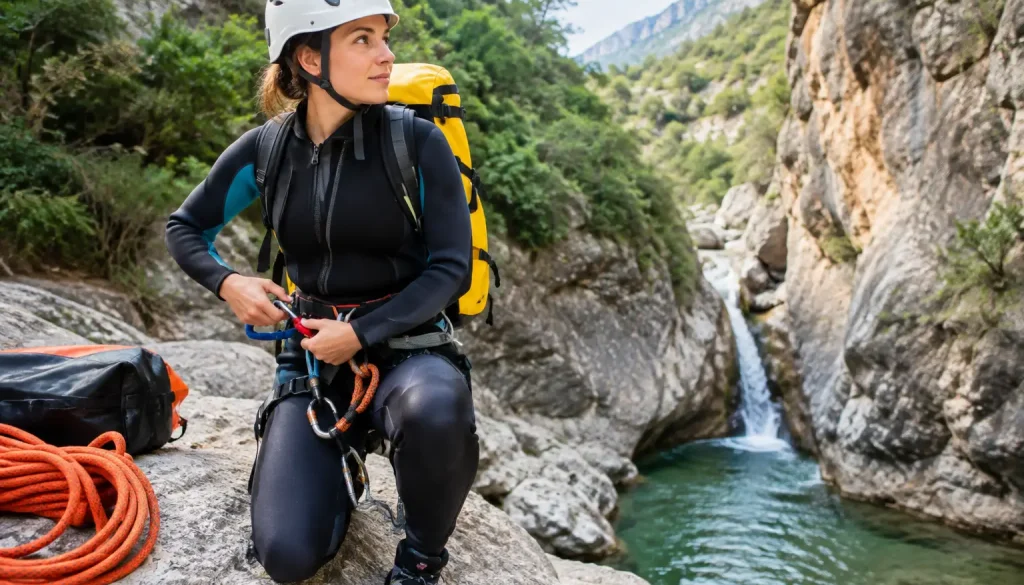
Your operator will normally provide the technical essentials: a wetsuit, helmet, harness, and canyoning-specific footwear or neoprene socks, depending on the route. Confirm what is included before leaving your resort. Canyoning equipment is not just for the photos – properly fitted gear protects you from cold, knocks, and slippery terrain.
Wear a swimsuit under your clothes so changing is quick at the meeting point. Bring a towel and a full change of dry clothes for afterward, including underwear and shoes. The drive back to Marbella or your hotel in Fuengirola feels much better when you are warm and dry.
For most trips, these items are genuinely useful:
- A reusable water bottle, preferably one you can secure or leave in the operator’s vehicle as instructed
- Sunscreen applied before you put on your wetsuit, especially for the walk-in and any open sections of canyon
- Any essential medication, including inhalers, packed in line with the operator’s guidance
- A small snack for before or after the activity, unless food is included
- A secure strap for prescription glasses, or contact lenses if they are comfortable for you
Leave jewelry, loose hats, and valuables at your accommodation. Even waterproof phones can be dropped, scratched, or lost in moving water. Some operators offer photos, while others allow a properly secured action camera. Ask first, because hands must stay free whenever the guide says so.
Footwear is worth checking twice
Old sneakers are not always suitable in a wet canyon. Their soles can become heavy, lose grip, and make walking uncomfortable. If specialist canyoning shoes are included, use them. If you are asked to bring closed-toe shoes, choose a pair that can get wet, fit securely, and have decent tread.
Flip-flops are useful only for the changing area. They are not safe for the canyon itself.
Plan transport from your resort town
This is where a little local knowledge saves a lot of holiday stress. Canyoning departure points are often in the mountains or rural areas inland from the Costa del Sol. A tour that looks close on a map may involve winding roads and a longer drive than expected.
Travelers based in Mijas or Fuengirola may have a more straightforward journey to certain inland meeting points than visitors coming from Marbella or Torremolinos, but it depends entirely on the canyon and operator. Pickup availability can also change by route, group size, and season. Never assume hotel pickup is included simply because your activity is advertised for the Costa del Sol.
Confirm the exact meeting point, meeting time, transfer option, and return estimate before you book. If you are renting a car, ask about parking and whether the final approach is suitable for standard vehicles. If transport is included, be ready early. Mountain departure times are often set to avoid heat, crowds, or changing afternoon conditions.
Avoid scheduling a late lunch reservation, airport transfer, or sunset boat trip immediately after canyoning. Return times can shift slightly due to group pace, weather checks, road conditions, or the extra time needed to get everyone safely changed and packed up.
Check the weather, then trust the guide
Costa del Sol sunshine can make canyoning sound like a guaranteed warm-weather activity, but canyons have their own microclimate. Water can stay chilly even in summer, shade can make a gorge feel cool, and rain far upstream can affect water levels where you are standing.
Do not judge conditions only by the forecast outside your hotel. Your guide will assess rainfall, water flow, access, and safety conditions before the trip. Sometimes a route changes, a start time moves, or an activity is postponed. That is good decision-making, not a ruined plan.
On hot days, eat a normal breakfast, drink water steadily, and avoid beginning dehydrated after a late night. On cooler days, follow the guide’s advice about layering before and after the canyon. Your wetsuit keeps you warmer in the water, but it is not a reason to ignore wind or temperature at the meeting point.
Make the safety briefing count
The briefing is not a formality before the fun begins. It is part of the fun because it gives you the skills to move through the canyon with confidence. Listen for instructions on jumping posture, landing position, rope use, spacing, hand signals, and where to wait after each feature.
A reputable guide will demonstrate techniques, check your harness and helmet, and make decisions based on the group’s ability. They may ask you not to jump from a spot that looked easy in a video, or ask everyone to take a different line through the water. Follow that call without debate. Natural terrain changes constantly.
Speak up immediately if your gear pinches, your helmet shifts, you are cold, or you do not understand an instruction. Small adjustments at the top of a descent are much easier than problems halfway down it. The strongest groups are not the loudest ones – they are the groups that communicate and look out for one another.
Canyoning is one of those Costa del Sol days that feels far from the resort routine: cool water, limestone walls, mountain air, and the satisfying buzz of doing something new together. Arrive prepared, give yourself time to reach the right meeting point, and let the guide lead the way. Your Adventure Starts Here – one careful step, splash, and rappel at a time.